
Wound care services, at the bedside
Assessment, treatment and follow-up for complex and non-healing wounds — delivered at home, in assisted living and in skilled nursing facilities.
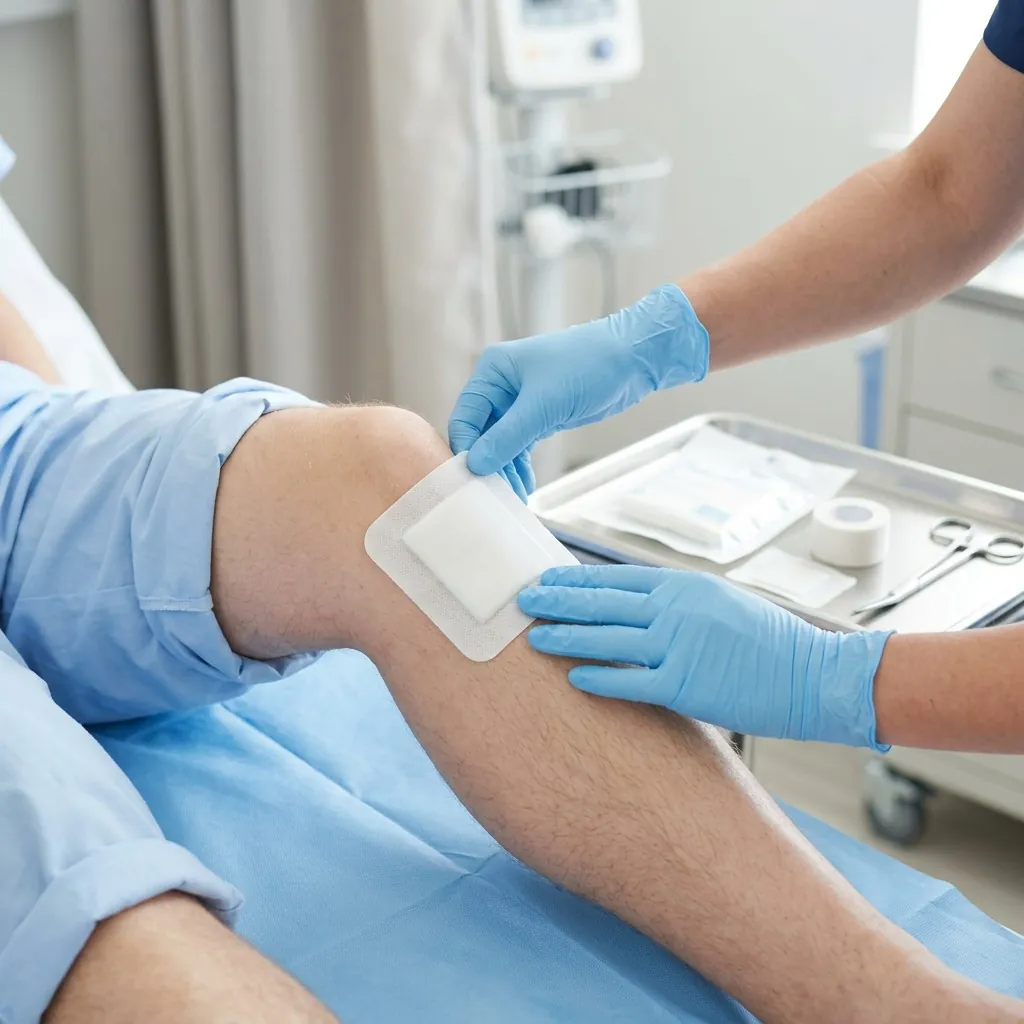
Everything a complex wound needs, without the clinic visit
Comprehensive assessment & diagnosis
A full evaluation at the bedside: wound measurements and photos, tissue and drainage assessment, circulation and risk factors. The result is a written plan of care shared with the patient’s physician.
Wound debridement
Removal of dead or nonviable tissue that keeps a wound from healing, performed at the bedside by a licensed clinician when clinically appropriate.
Advanced wound dressings
Foam, silver, alginate, hydrocolloid, collagen and other modern dressings, chosen for the wound type and changed on a set schedule.
Wound vac (NPWT) & compression
Negative pressure wound therapy for deep or slow-closing wounds, and multi-layer compression for venous leg ulcers and swelling.
Skin substitutes & ultrasound
Advanced therapies for wounds that have not responded to standard care — used only when medically necessary and fully documented.
Infection management
Wound cultures, monitoring for signs of infection and treatment coordinated with the primary care physician.
G-tube care
Care of feeding tube sites, including site management and tube replacement at the bedside.
Education & prevention
Practical teaching for patients, families and caregivers: dressing care between visits, nutrition, pressure relief and skin protection.
Complex and non-healing wounds
Pressure injuries (bedsores)
Heels, hips, tailbone and other pressure points in patients with limited mobility.
Diabetic ulcers
Foot and lower-leg wounds in patients with diabetes, where early care helps protect the limb.
Venous leg ulcers
Lower-leg wounds linked to poor vein circulation, often with swelling and skin changes.
Arterial ulcers
Wounds caused by reduced blood flow, usually on the feet and toes.
Post-surgical wounds
Incisions that opened, keep draining or are slow to close after surgery.
Traumatic wounds
Lacerations and injuries that need ongoing professional care.
Skin tears & grafts
Fragile skin injuries and care of graft sites.
Burns
Ongoing care of burn wounds outside the hospital.
Chronic non-healing wounds
Any wound that has not improved after several weeks of standard care.
Infected wounds
Wounds with redness, warmth, odor or drainage that need assessment and treatment.
From first visit to closed wound
Assessment
A clinician evaluates the wound at the bedside within 48 hours of an accepted referral.
Plan of care
A written treatment plan, shared with the patient’s physician and care team.
Treatment at the bedside
Debridement, dressings and therapies on a regular visit schedule.
Follow-up and reporting
Weekly visits until the wound closes, with notes and photos after every visit.
Conservative care first
We start with proven standard wound care. Advanced products such as skin substitutes are used only when they are medically necessary, after standard care, and are fully documented in the patient’s record.
Every treatment decision is made by a licensed clinician and coordinated with the patient’s physician.