
Diabetic foot ulcers
Foot sores in people with diabetes need fast, expert care. Early treatment helps protect the foot.
How we help
Diabetes can reduce feeling in the feet and slow blood flow, so small injuries can turn into ulcers without the person noticing. These wounds are prone to infection and need prompt care.
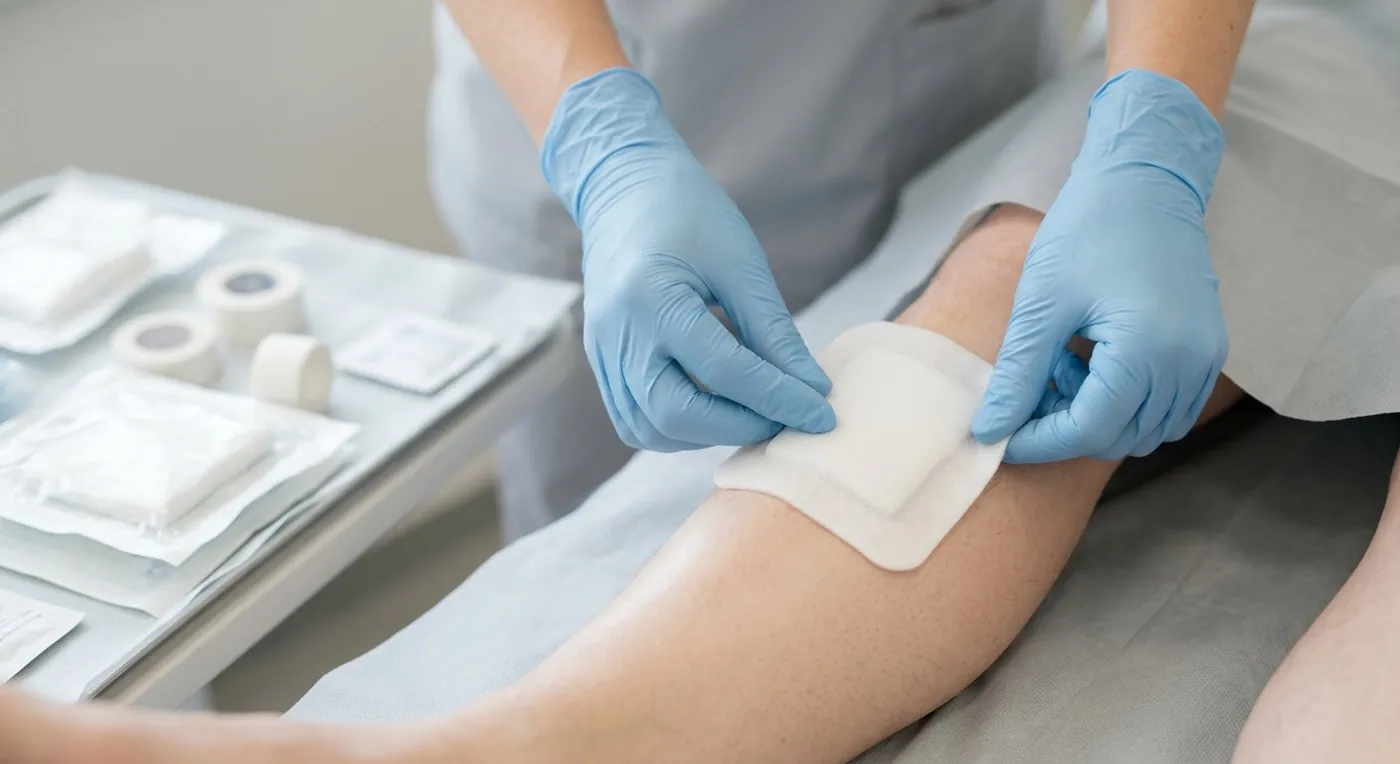
Our clinicians take pressure off the wound, remove dead tissue, treat and watch for infection, and screen circulation. We coordinate with the patient’s physician, podiatrist and vascular specialist when needed, and teach daily foot checks to prevent new ulcers.
Who it helps
- People with diabetes who have a sore on the foot or toe
- Wounds that are not healing or are getting deeper
- Patients with numbness or poor circulation in the feet
- Patients with a history of foot ulcers
Your visit, step by step
Foot assessment
The wound, sensation, circulation and footwear are checked.
Offloading
Ways to take pressure off the ulcer while it heals.
Treatment
Debridement, dressings and infection control.
Coordination
Updates to the physician, podiatrist and vascular team as needed.
Common questions
Why is a small foot sore a big deal with diabetes?
Reduced feeling and blood flow mean it can worsen quickly and become infected. Early care matters.
Does blood sugar affect healing?
Yes. Good blood sugar control supports healing; we share findings with the patient’s physician.
How can we prevent new ulcers?
Daily foot checks, proper footwear and regular follow-up.