
Wound vac (NPWT) & compression therapy
Two proven therapies, delivered at the bedside: gentle suction for deep wounds, and compression for leg ulcers.
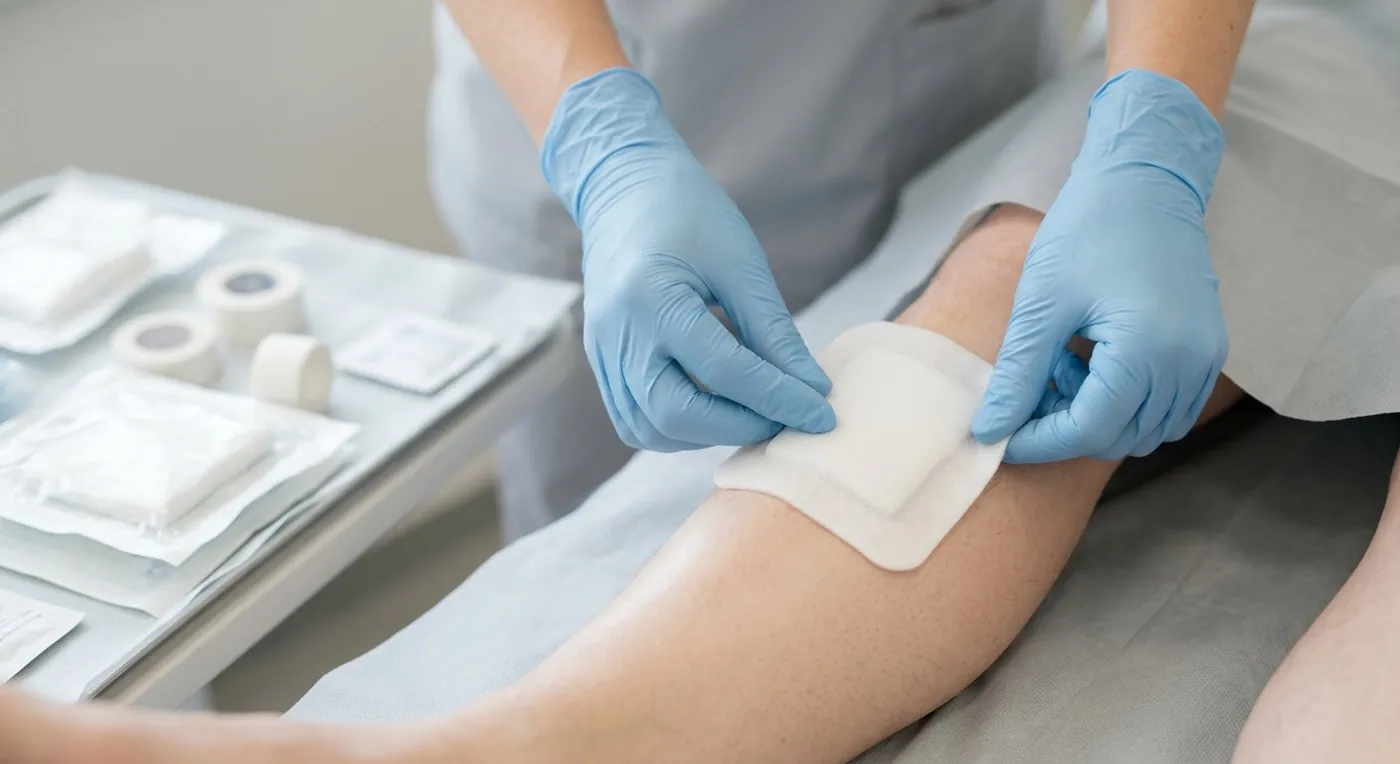
How we help
Negative pressure wound therapy, often called a wound vac, uses a sealed dressing connected to a small portable pump. Gentle suction removes excess fluid and helps the wound close. It is often used for deep wounds, surgical wounds that opened, and large pressure injuries. Our clinicians apply and change the dressing, usually two to three times a week, and check the device.
Compression therapy uses multi-layer wraps or garments to reduce swelling and improve blood flow in the legs. It is a cornerstone of care for venous leg ulcers. Before starting compression, we check that the arteries in the leg can safely tolerate it.
Who it helps
- Deep or large wounds that are slow to close
- Surgical wounds that opened
- Stage 3 and 4 pressure injuries
- Venous leg ulcers and leg swelling
Your visit, step by step
Safety check
The clinician confirms the therapy is safe for this wound and patient.
Application
The wound vac dressing or compression wrap is applied at the bedside.
Device check
Settings, seal and fit are checked; caregivers learn what to watch for.
Follow-up
Regular visits to change dressings and measure progress.
Common questions
Can a wound vac be used at home?
Yes. Portable units are designed for home use. We manage the dressing changes and coordinate the device supplier.
What if the wound vac alarms?
Most alarms mean a leak in the seal. We explain what to do and you can call us any time.
Is compression safe for everyone?
No. We check circulation first, because compression is not safe for legs with poor arterial blood flow.