
Venous leg ulcers
Venous ulcers form on the lower leg when blood pools in the veins. Compression is the key to healing them.
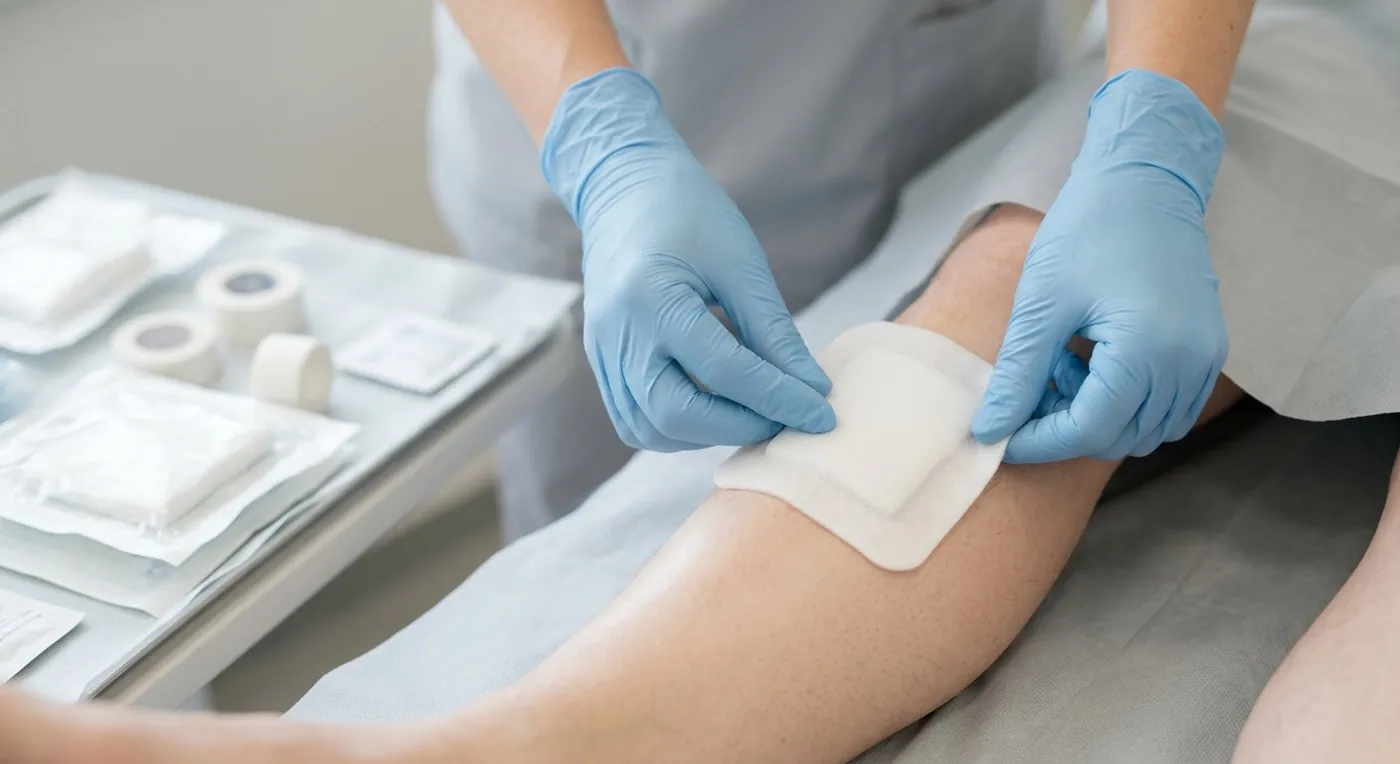
How we help
Venous leg ulcers usually appear on the inner lower leg or around the ankle, often with swelling, heavy drainage and darkened or hardened skin. They are caused by veins that no longer move blood back to the heart well.
After checking that it is safe, our clinicians use multi-layer compression to reduce swelling, manage drainage with the right dressings, and protect the surrounding skin. We also teach leg elevation and, once the ulcer heals, the use of compression stockings to keep it from coming back.
Who it helps
- Open sores on the lower leg or ankle
- Leg swelling with skin discoloration
- Ulcers with heavy drainage
- Patients whose leg ulcers keep coming back
Your visit, step by step
Circulation check
We confirm compression is safe for the patient’s leg.
Wound care
Cleaning, dressings for drainage and skin protection.
Compression
Multi-layer wraps applied at the bedside.
Prevention
Elevation, activity and stockings to prevent recurrence.
Common questions
Why is compression so important?
It reduces swelling and helps blood move out of the legs, which lets the ulcer heal.
Will the ulcer come back?
Venous ulcers can recur. Wearing compression stockings after healing lowers the risk.
Can compression be done at home?
Yes. We apply and change compression wraps at home.