
Wound debridement at the bedside
Dead or damaged tissue keeps a wound from healing. Removing it gives healthy tissue room to grow.
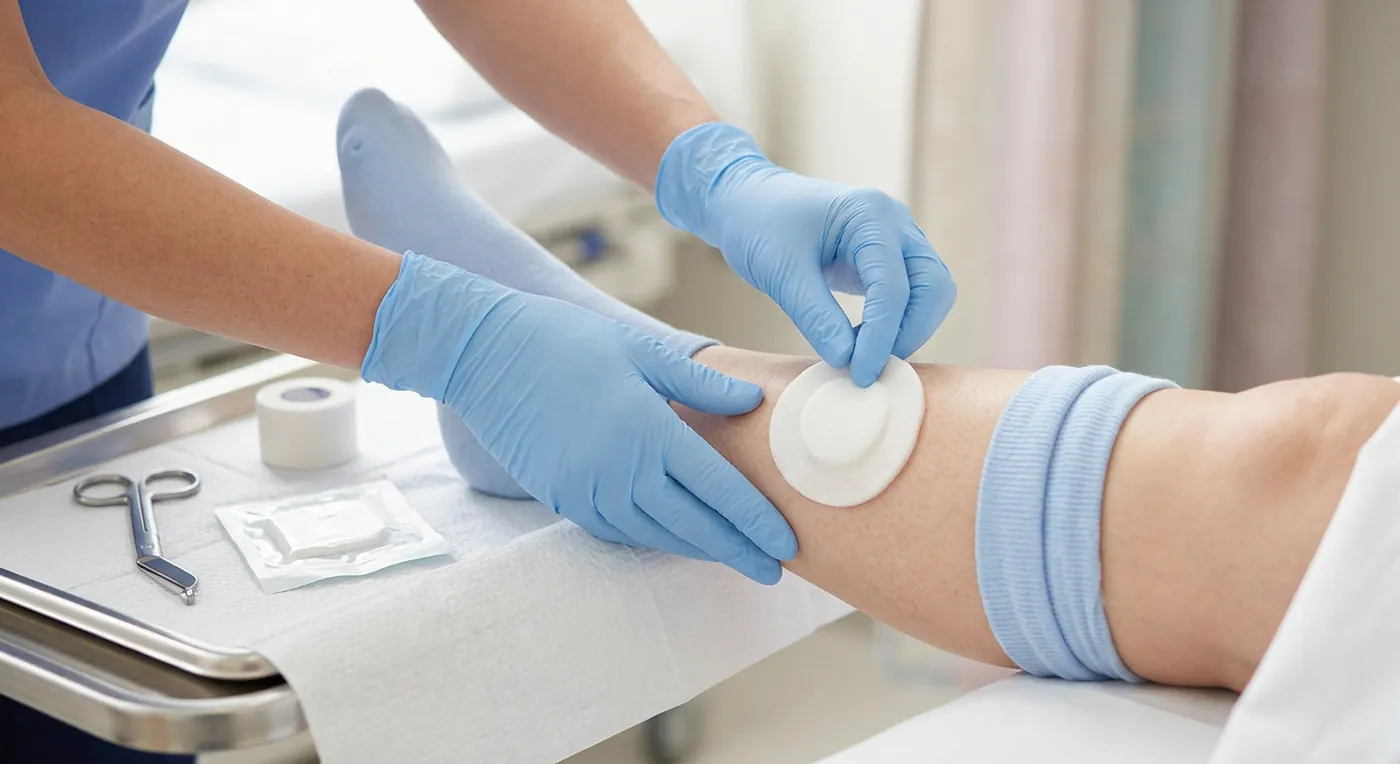
How we help
Debridement is the removal of nonviable tissue — such as slough or dead tissue — from the wound bed. It is one of the most important steps in getting a stalled wound to heal.
Our clinicians choose the method that fits the wound and the patient: conservative sharp debridement with sterile instruments, or gentler enzymatic or autolytic methods using specialized products and dressings. Debridement is not right for every wound — for example, some wounds with poor blood flow are better left alone — and that decision is always made by a licensed clinician.
Who it helps
- Wounds covered with slough or dead tissue
- Pressure injuries and diabetic ulcers that have stalled
- Wounds being prepared for advanced therapies
- Patients who cannot easily travel to a clinic
Your visit, step by step
Assessment
The clinician confirms debridement is appropriate and safe.
Comfort
Topical numbing can be used to keep the patient comfortable.
Debridement
Nonviable tissue is removed with the method chosen for this wound.
Dressing and plan
A fresh dressing is applied and the next visit is scheduled.
Common questions
Is debridement painful?
Most patients feel little discomfort. Topical numbing can be used, and the clinician stops if the patient is uncomfortable.
How often is it done?
It depends on the wound. Some wounds need it at several visits; others only once.
Can it be done at home?
Yes. Bedside debridement is done at home, in assisted living or in a skilled nursing facility.